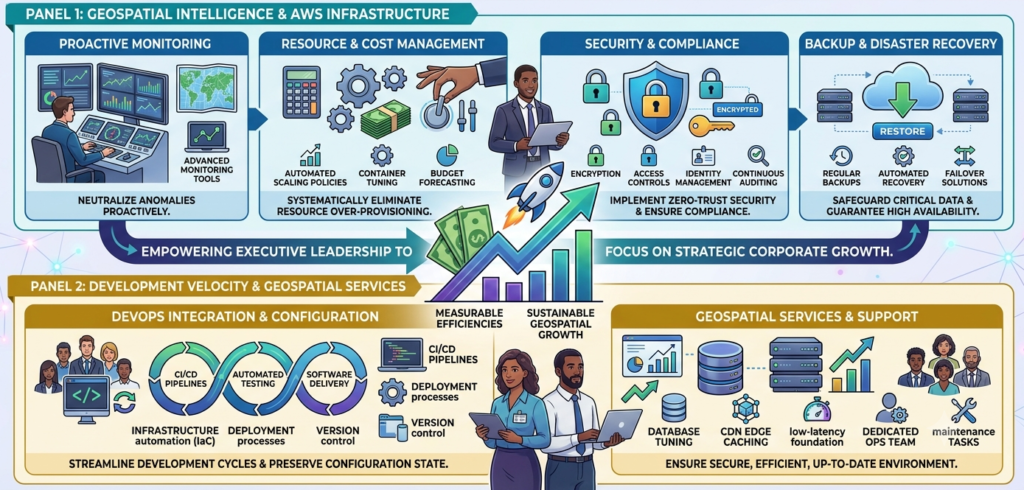
Our Cloud-Native Geospatial Intelligence platform unifies massive volumes of fragmented property records, multi-temporal raster imagery, and environmental layers into a single, governed architecture. Powered by Amazon S3, AWS Glue, and high-performance warehousing, the platform uses event-driven AWS Step Functions and Lambda workflows to ingest, validate, and tile over 75 million imagery assets seamlessly. Provisioned entirely via Terraform Infrastructure as Code (IaC), this fully decoupled environment guarantees absolute data lineage, strict security compliance, and highly repeatable multi-environment deployments. By abstracting backend storage complexity, the platform accelerates decision velocity for over one million users through secure RESTful APIs and governed GeoServer map layers. It blends granular property boundaries with real-time environmental context to render low-latency, interactive visualizations directly within customer-facing web applications. This metadata-driven discovery engine transforms disconnected files into an integrated, analytics-ready asset, establishing a highly scalable foundation that eliminates operational friction and drives strategic growth across property evaluation, insurance risk analysis, and digital twin applications.
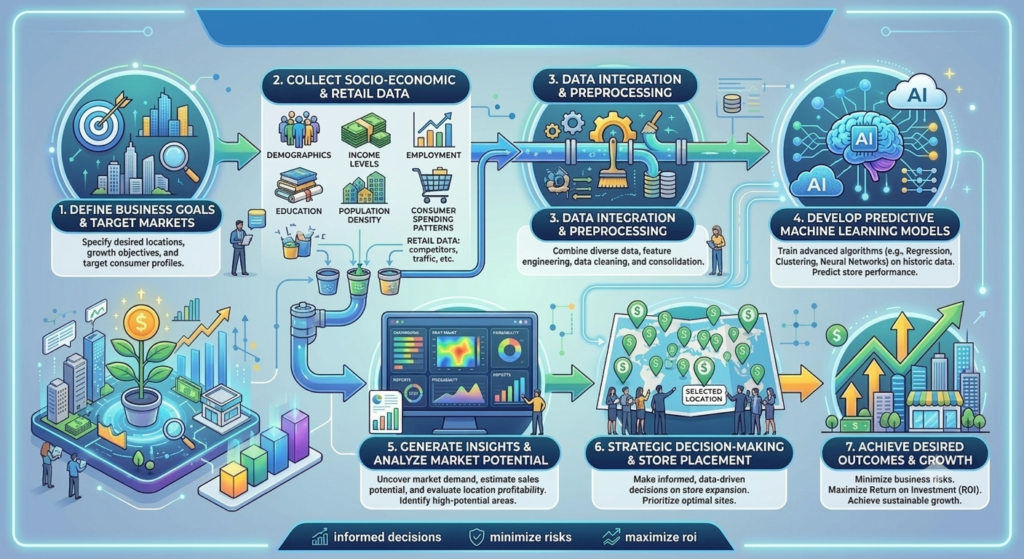
In the competitive retail landscape, identifying optimal new store locations is crucial for business growth and success. Leveraging data science and socio-economic factors, businesses can make informed, strategic decisions about where to expand. This predictive approach involves analyzing a variety of socio-economic factors, including demographic data, income levels, employment rates, education levels, population density, and consumer spending patterns. By integrating these data points with advanced machine learning algorithms, businesses can uncover insights into potential market demand and profitability. The combination of socio-economic analysis and machine learning enables a data-driven approach to store placement, minimizing risks, and maximizing return on investment.
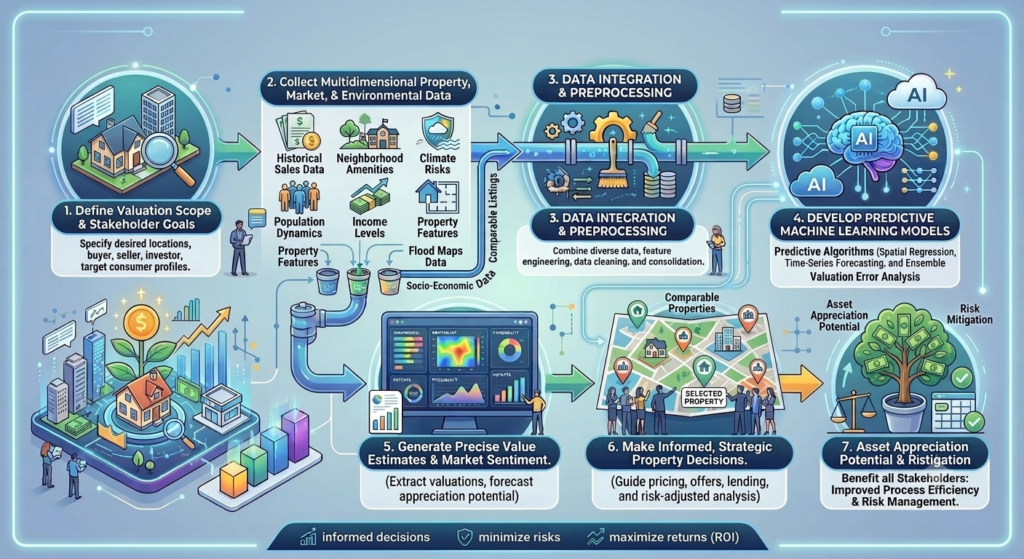
Property valuation is a key analytic use case in real-estate, providing crucial insights for buyers, sellers, investors, and financial institutions. By utilizing data analytics, data scientists can integrate various factors such as historical sales data, neighborhood trends, climate-related risks, and social indicators to better understand market trends and price fluctuations. Climate insights, such as flood zones or natural disaster history, play a significant role in determining property values. Moreover, socio-economic factors like population growth, income levels, and employment rates can significantly impact property values. By analyzing these factors, data scientists can predict market demand and potential price appreciation. This data-driven approach not only enhances the efficiency and reliability of the valuation process but also aids in better decision-making and risk management. In essence, data analytics empowers real-estate professionals to make informed, strategic decisions, ultimately benefiting all stakeholders involved.